All Categories
Featured
Table of Contents
For clients, it's a "excellent time to be releasing capital into these markets," since the mid- to late-stage firms have "a lot more sensible appraisals" than startups, Cohen stated."We can really also buy shares of business from early-stage investors who are seeking to leave their position," he stated. "We can kind of been available in, swoop in and purchase them at a discount rate." Aaron White is the primary growth officer and a principal of Bay Area, California-based Adero Partners.
Given that companies are a lot more valuable by the time they do go public or get acquired by other companies, some investors have the opportunity to reap large returns in locations like SaaS that "have lower overhead and more rapid development as they broaden the product that they have and raise awareness," he stated."The private markets have developed to the point that business no longer require to have an IPO to raise capital," White stated.
With less publicly traded companies and a growing private credit market, equity capital investments in the center to late rounds of funding have emerged as a much more distinct property class. Processing ContentMid- to late-stage equity capital funds bring much stabler returns and lower failure rates with the possibility of faster liquidity occasions than investments in start-up companies.
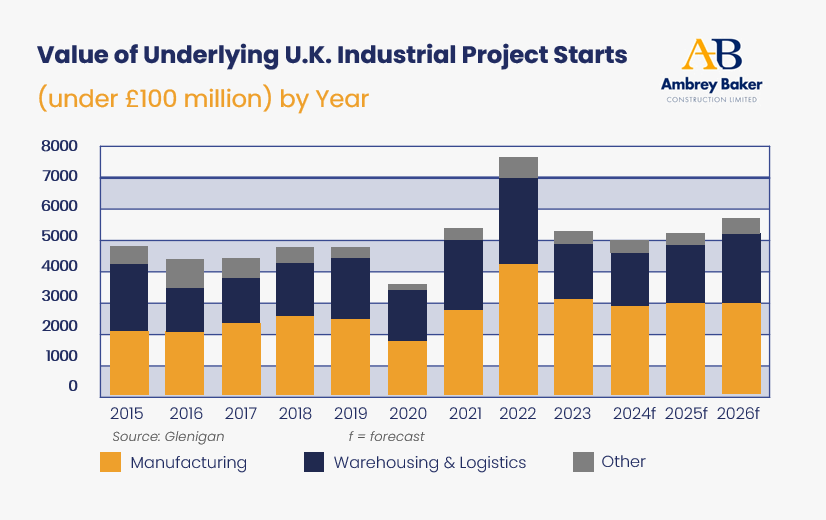
Growth Capital Shifts for British Industries
As wealth management companies flock into personal capital and other nonpublic alternative financial investments, one signed up investment advisory its second mid- to late-stage venture fund this month with an objective of raising $50 million and retail-client-catered investment minimums of $250,000. New York-based is pitching its to the high net worth consumers of fellow RIAs since the "$2 million and $3 million customer" typically has trouble certifying or paying the costs for those types of personal market investments, CEO Sevasti Balafas said in an interview.
Sevasti Balafas is the founder and CEO of New York-based signed up investment advisory firm GoalVest Advisory. GoalVest Advisory and endeavor funds in specific have actually proven in terms of their returns and, as well as being a location of innovation, and themselves.
The "liquidity timeline" and "risk-return profile" for mid- to late-stage financial investments look much different from startups that can have lockup periods for "an extended number of years" as business stay private for much longer these days, according to Kaidi Gao, an associate equity capital research study analyst at information and research study firm, a Morningstar business.
"In contrast, later-stage investments are safer, since at this point, business have already tested out their items and services, and are focusing on scaling and development. Multiples produced from investments made to fully grown organizations tend to be stabler, however you are much less likely to see outsized returns there.
The Financial Impact of Ethical Supply Chains
In between those two classifications, they remain in the mid- to late-stage. "The business is attempting to broaden their reach, their client base, ramp up sales and marketing and move into profitability eventually in the future," White said. "Those are the three stages that we look at buying, and there are the pros and cons of each."The GoalVest product charges a management fee of 1.5% and carried-interest sharing of 15%, compared to the respective standard industry rates of 2% and 20%, and it will buy a comparable group of companies to that of the first fund's roughly 20 holdings that include bakery chain Sleeping disorders Cookies, defense innovation company Shield AI and sales software, according to Balafas and Blair Cohen, the head of personal investments with.
For clients, it's a "fantastic time to be releasing capital into these markets," since the mid- to late-stage firms have "a lot more reasonable appraisals" than start-ups, Cohen stated."We can actually likewise purchase shares of business from early-stage financiers who are looking to leave their position," he said.
Mid-stage startups are running in a very different endeavor capital landscape in 2026. It's not that funding has disappeared, however the expectations around it have actually progressed. Investors can be slower to devote, more selective about where dollars go, and concentrated on real traction over momentum. For founders, this implies the bar has been raised.
Instead, expectations are now focused around capital effectiveness, sustainability, and strategic positioning. Contributing to the intricacy, regional communities are diverging, and funding results are progressively shaped by sector expertise and regional dynamics. Here's how today's mid-stage startups are adapting, and what founders might wish to keep in mind to remain fundraising-ready in a slower-moving, however still active, market.
In 2021 and 2022, "development at all expenses" was the standard. As economic conditions moved, numerous of those boom-era deals are now undersea-- and financier behavior has actually altered in kind.
Growth Capital Trends for UK Industries
The average time to close a VC round struck approximately 2 years, up from about 1.3-1.4 years in 2019. Financiers became more selective, trying to find start-ups with strong capital, strong system economics, and the ability to do more with less. For mid-stage startups, this shift might mean basics come first.
Strategic Scaling: How to Expand Without Losing Your IdentityWhile offers are still occurring, they're taking longer, and the bar to follow-on financing has risen a shift we explored in our breakdown of three crucial fundraising patterns to enjoy. For mid-stage start-ups, the ramification can be clear: momentum alone will not always suffice. Investors wish to see a clear focus on the fundamentals, including: Capital effectiveness: Doing more with less Runway management: Having enough cash to stay flexible, particularly offered today's extended fundraising timelines Operational rigor: Clear metrics, lean groups, and wise spend Startups with inflated assessments can now be under higher pressure to show traction and validate their pricing.
At the same time, due diligence has actually been getting much deeper. Investors are normally investing more time verifying financial discipline, product-market fit, and defensibility before writing checks. Founders preparing for a fundraise might wish to revisit what today's due diligence procedure really appears like this list can help. With median fundraising timelines now extending to approximately 2 years, capital has been flowing towards start-ups with strong basics and enduring competitive benefits-- not simply growth stories.
Start-ups face a shifting set of expectations and an endeavor capital landscape that's significantly varied. Pulling from our Equity Capital Report in partnership with Pitchbook, in 2026, 5 crucial patterns are forming where capital circulations and the length of time it might require to raise: AI represented almost half of all United States VC offer worth and almost a 3rd of deal count in 2024.

Latest Posts
Human Capital Management Tactics for Global Growth
How Digital Systems Reshape Global Industry
Scaling the UK Talent Pool